
Disclosure: This article contains an affiliate link. If you buy through it, we may earn a commission at no extra cost to you. This content is informational and is not a substitute for medical advice.
Red Light Therapy Cap for Hair Growth: Does It Really Work?
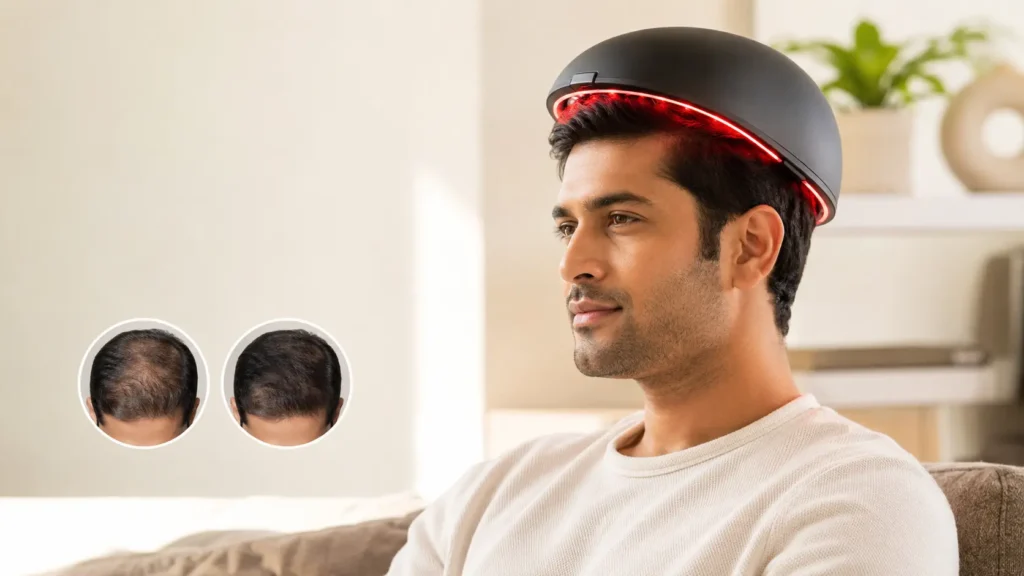
Hair thinning can be frustrating, especially when shampoos, supplements and quick-fix products make bigger promises than the evidence supports. A red light therapy cap for hair growth takes a different approach: it delivers low-level red light across the scalp in a hands-free device that can be used at home.
Research suggests that low-level light or laser therapy may improve hair density for some people with pattern hair loss. However, it is not an instant cure, it does not work for every type of hair loss, and the quality of the device matters. This guide explains how these caps work, who may benefit, what results to expect and what to check before spending your money.
Check the latest price and product details on Amazon
What Is a Red Light Therapy Cap?
A red light therapy cap is a wearable device fitted with laser diodes, light-emitting diodes (LEDs), or a combination of both. It directs low-intensity red light toward the scalp. The treatment is commonly called low-level light therapy (LLLT), low-level laser therapy or photobiomodulation.
Unlike the high-powered lasers used for surgery or hair removal, an LLLT cap is designed to expose the scalp to non-thermal light. The cap format helps distribute light across a larger area while allowing the user to sit, read or work during a session.
How May Red Light Therapy Support Hair Growth?
Researchers are still studying the exact biological process. The leading theory is that specific wavelengths of light are absorbed by cells and may influence cellular energy production, circulation and signalling around the hair follicle. This may help some follicles remain in, or return to, the active growth phase.
That does not mean dormant follicles will always restart or that a cap can reverse every cause of baldness. The strongest evidence is for androgenetic alopecia, commonly called male-pattern or female-pattern hair loss. A 2025 systematic review reported a significant increase in hair density among people with androgenetic alopecia who used laser or LED therapy compared with placebo. The American Academy of Dermatology also describes low-level laser therapy as a potentially effective, non-invasive option for hereditary hair loss.
Does a Red Light Therapy Cap Really Work?
The short answer is: it may help the right person when used consistently, but results are not guaranteed.
Clinical studies and reviews have reported improvements in hair density in some adults with pattern hair loss. At the same time, study methods, devices, treatment schedules and follow-up periods vary. That makes it difficult to promise a specific percentage of regrowth for every cap or every user.
A realistic goal is usually reduced shedding, improved density or thicker-looking existing hair—not a completely restored hairline. People with early-stage thinning are generally more plausible candidates than those with long-standing, smooth bald areas where follicles may no longer be active.
Who May Benefit From a Laser Cap for Hair Growth?
A red light or laser cap may be worth discussing with a dermatologist if you:
- Have been diagnosed with male-pattern or female-pattern hair loss.
- Are noticing gradual thinning rather than sudden patchy hair loss.
- Want a non-invasive, drug-free addition to your hair-care routine.
- Can follow the recommended schedule for several months.
- Understand that maintenance sessions may be needed to preserve results.
It may be less useful when hair loss is caused by iron deficiency, thyroid disease, recent illness, severe stress, medication, scalp inflammation, tight hairstyles or an autoimmune condition. Treating the underlying cause is more important than shining light on the scalp.
How Long Does It Take to See Results?
Hair grows slowly, so a few sessions are not enough to judge performance. The American Academy of Dermatology notes that laser therapy may require several sessions per week for many months before a person sees even a modest amount of growth.
Depending on the device and your dermatologist’s advice, a practical evaluation period may be around three to six months. Take clear photos under the same lighting, from the same angle and with the same hairstyle every four weeks. This is far more reliable than checking the mirror every day.
How to Use a Red Light Therapy Hair Cap
- Read the manual first. Session length and frequency vary by device; more exposure is not automatically better.
- Use it on a clean, dry scalp. Part thick hair if necessary so light can reach the scalp rather than only the hair.
- Fit the cap correctly. The light-emitting surface should sit in the position specified by the manufacturer.
- Follow the exact schedule. Consistency is more useful than occasional long sessions.
- Protect your eyes as directed. Use supplied eye protection if the instructions require it and never stare directly at bright diodes.
- Track progress monthly. Look for changes in shedding, density and scalp coverage over time.
What to Check Before Buying a Red Light Therapy Cap
Do not choose a device only because it has the most LEDs or the largest discount. Compare the details that affect safety, usability and confidence in the product.
1. Regulatory and Testing Information
Look for clearly documented regulatory status for the exact model and intended use. In the United States, “FDA-cleared” and “FDA-approved” are not interchangeable claims. If a listing claims clearance, confirm that the manufacturer provides verifiable details rather than relying only on a badge in a product image.
2. Light Source and Wavelength
Check whether the cap uses lasers, LEDs or both, and whether the seller clearly states the wavelength and treatment specifications. More diodes do not necessarily mean a better clinical result; coverage, energy delivery and device design also matter.
3. Full-Scalp Coverage
A good cap should distribute light across the areas you want to treat. Review the internal layout, not just the exterior design.
4. Session Time and Comfort
A lighter, comfortable cap with an automatic timer is easier to use consistently. Also check whether it must remain plugged in or can work with a rechargeable battery or power bank.
5. Warranty and Return Policy
Because visible change may take months, compare the warranty, return window and customer-support terms before ordering. Read the current seller and marketplace conditions carefully, as they can change.
6. Verified Buyer Feedback
Focus on reviews that discuss fit, heat, battery life, build quality and consistent use over several months. Be cautious with dramatic before-and-after claims that do not use matching lighting or angles.
View the red light therapy cap, current offer and customer reviews on Amazon
Possible Side Effects and Safety Precautions
LLLT is generally described as non-invasive and painless, but no home device is risk-free for every person. Depending on the product and user, possible issues may include scalp warmth, temporary redness, dryness, itching, headache or eye discomfort.
Speak with a qualified dermatologist before use if your hair loss is sudden, patchy, painful or accompanied by scaling, sores or inflammation. Also seek professional advice if you have a photosensitivity condition, take medication that increases light sensitivity, have a history of skin cancer on the scalp, are pregnant, or are already undergoing medical treatment for hair loss.
Stop using the device and seek medical guidance if it causes persistent pain, burns, eye symptoms or worsening scalp irritation.
Red Light Cap vs Minoxidil: Which Is Better?
They are different options rather than perfect substitutes. Minoxidil is applied to the scalp and has established evidence for pattern hair loss, but it can cause irritation and requires ongoing use. A light-therapy cap avoids topical application but usually costs more upfront and still demands a long-term routine.
Some research suggests combined treatment may perform better than either option alone for certain patients. Do not add, stop or combine hair-loss treatments without discussing your diagnosis and medical history with a dermatologist.
Is a Red Light Therapy Cap Worth Buying?
It may be worth considering if you have diagnosed pattern hair loss, prefer a non-invasive at-home option and are prepared to use it consistently for months. It is less likely to be a good purchase if you expect rapid regrowth, do not know why your hair is falling, or the listing does not provide trustworthy device specifications and support terms.
Before buying, compare the exact model’s specifications, regulatory information, warranty, returns and recent customer reviews. Most importantly, get the cause of your hair loss assessed—the right diagnosis can save both time and money.
Check availability and the latest Amazon price
Frequently Asked Questions
Can red light therapy regrow completely lost hair?
It is more realistic to expect possible improvements in shedding, thickness or density where follicles remain active. A cap is unlikely to fully restore long-standing smooth bald areas, and individual results vary.
How often should I use a red light therapy cap?
Follow the schedule supplied with the exact device. Studies and products use different treatment times and frequencies, so do not assume that daily use or longer sessions will work better.
Can women use a red light therapy cap?
Some devices are intended for both male-pattern and female-pattern hair loss. Women should still obtain a diagnosis because shedding can also result from pregnancy, hormonal changes, thyroid problems, iron deficiency and other causes.
Can I use a laser cap with minoxidil?
Combination treatment is sometimes used and may benefit selected patients, but it should be planned with a dermatologist. Follow both the medical advice and device instructions.
Do I need to continue using the cap after seeing results?
Pattern hair loss is progressive, so maintenance may be necessary. The appropriate long-term schedule depends on the device, diagnosis and treatment plan.
Is red light therapy safe for the eyes?
Bright red or laser light should not be viewed directly. Follow the manufacturer’s eye-safety instructions and use appropriate protection whenever required.
Final Verdict
A red light therapy cap for hair growth is a convenient and promising option for some adults with pattern hair loss. Evidence is encouraging, but it should be approached as a long-term treatment tool—not a miracle cure. Choose a well-documented device, follow its instructions, track progress objectively and involve a dermatologist when possible.